Goalkeeper catching soccer drill: the W and the basket
This goalkeeper drill teaches the two basic catches with soft underarm throws from a partner: the W, with thumbs together behind a ball above the waist, and the basket, scooping a low ball into the chest. It trains safe hands, and getting the body behind the ball as a second barrier.
Soccer is called football in most of the world. This guide is part of Futbol Island’s free football lessons for kids aged 7 to 12.
Goalkeeper catching: W and basket: setup diagram
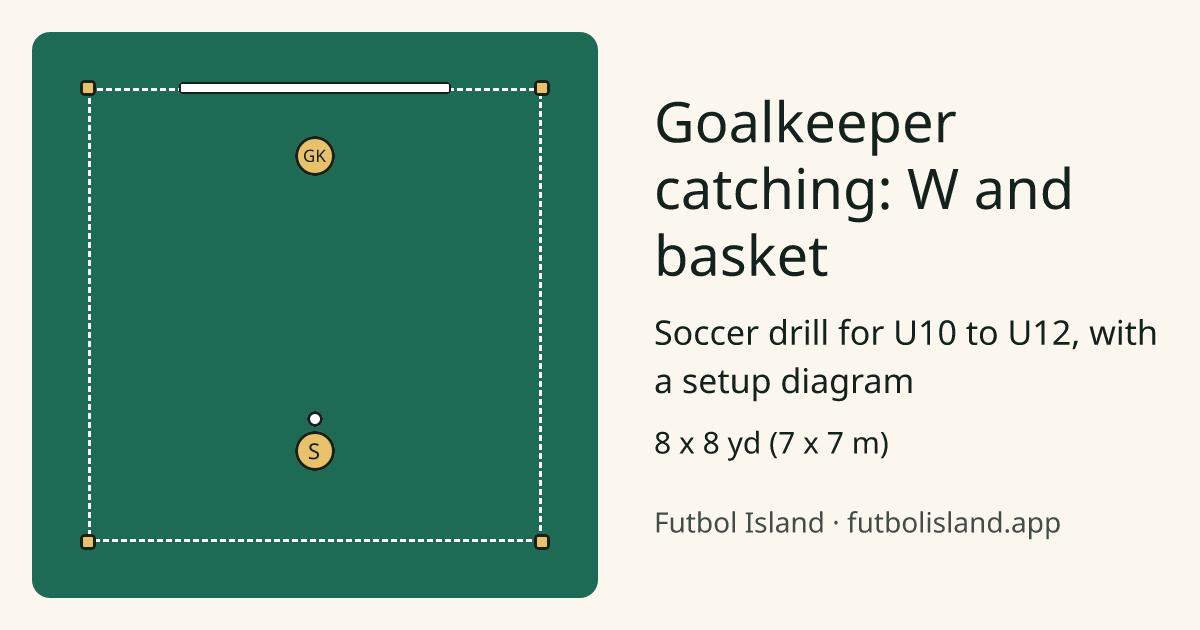
At a glance
| Detail | For this drill |
|---|---|
| Ages | U10 to U12 (ages 9 to 12) |
| Players | Pairs; every player can take a turn |
| Space | 8 x 8 yd (7 x 7 m) |
| Equipment | One ball per pair in the right size; gloves if available |
| Time | 8 to 10 minutes |
| Skill | Goalkeeping basics |
Change the size of the area to fit your group: bigger makes it easier for the player with the ball, smaller makes it harder. Everyone who goes out comes straight back in, and nobody runs laps.
How to run it
- Partners stand 5 yards apart. The server throws underarm, softly.
- The W: for a ball at chest or face height, hands go up with fingers spread and thumbs nearly touching behind the ball, making a W. Catch it in front of the face with elbows bent, then bring it in to the chest.
- The basket: for a ball below the waist, palms face up with little fingers together, and the ball is scooped up into the chest with the body leaning over it.
- The scoop: for a rolling ball, step behind it, bend one knee toward the other heel so nothing can go through the legs, and scoop it up.
- Mix them: the server calls nothing, and the keeper reads the height. Ten balls, then swap.
Coaching points to say out loud
- “Eyes on the ball into your hands.”
- “Thumbs together for a W.”
- “Little fingers together for the basket.”
- “Body behind the ball.”
Make it easier or harder
Easier
The server stands 3 yards away and tells the keeper which catch is coming.
Harder
The keeper shuffles to a cone and back before each catch, or the server gently volleys the ball from the hands instead of throwing.
Common mistakes
- Hands on the sides of the ball, so it slips straight through.
- Catching beside the body. If the ball is dropped there, nothing is behind it.
- Service that is too hard. Confidence comes first, and a sore face ends a keeper’s interest quickly.
Why it matters in a game
A keeper who catches cleanly ends the attack, while one who drops the ball starts a scramble. That is the moment in our lesson on shot reaction: attackers follow in for rebounds, and a clean catch gives them nothing.
The lesson that teaches it: Watch What Happens After the Shot.
Do it at home
A parent throwing underarm from five steps is all it takes. Use a soft or slightly deflated ball at first.
Questions about Goalkeeper catching: W and basket
What is the W catch in goalkeeping?
The hand shape for catching a ball above the waist: fingers spread, thumbs almost touching behind the ball. The thumbs and first fingers make the letter W.
What is the basket catch?
The catch for a low ball: palms up, little fingers together, scooping the ball up and hugging it to the chest.
Do kids need goalkeeper gloves?
They help with grip and confidence, but they are not required to learn. Good hand shape matters more than gloves.
Lessons that teach this idea
- Watch What Happens After the Shot (7v7 lesson)A wide midfielder reads a loose rebound or a goalkeeper’s controlled ball before deciding whether to approach or recover.
- Keeper: Defend the Goal or the Space (Futsal lesson)Adjust the goalkeeper’s depth to the attacker’s threat and whether a defender still provides cover.
- Your Keeper Can Help (7v7 lesson)Pass back to your keeper when the way is clear. The keeper must play it with their feet, not hands. If it's covered, pick another teammate.
Related drills and guides
- Goalkeeper footwork and set position (drill)It trains quick side steps and being still and ready at the moment of the shot.
- Goalkeeper angles (drill)It trains positioning: being in the right spot, a step or two off the goal line, before the shot is taken.
- Goalkeeper distribution (drill)It trains accurate distribution, and choosing the teammate who is free.
- Thigh and chest control (drill)It trains bringing a bouncing or dropping ball under control without using the head.
- Goalkeeper in soccerThe job, the skills and where to stand
- The back-pass ruleWhen the goalkeeper must use their feet
- Soccer ball size by ageSize 3, 4 or 5 for each age group
- U10 soccer drills for 9 and 10 year oldsTen drills for 9 and 10 year olds: rondos, first touch, 2v1 and first goalkeeping
- U12 soccer drills for 11 and 12 year oldsTen drills for 11 and 12 year olds: 4v2 rondos, possession, defending in pairs and finishing
- Soccer drills to do at homeSolo and parent-and-child drills for a yard, a driveway or a wall
- All goalkeeping basics drillsFootwork, safe hands and starting the attack. From U10, with soft service.
Futbol Island is a free football (soccer) learning game for kids aged 7 to 12. Every idea on this page is taught on a pitch with moving players, then checked with a quick quiz.